Dynasties 18–20, empire in Asia and Nubia, Hatshepsut to Ramesses, Amarna, late periods, Persians, Ptolemies, and Roman Egypt—one continuous story.
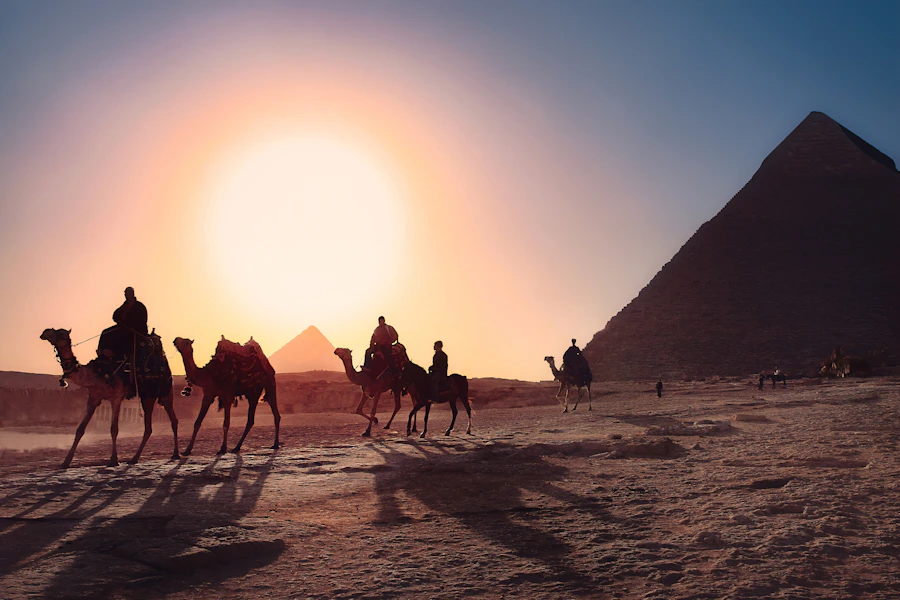
The New Kingdom (c. 1567–1085 BCE), Dynasties 18–20, is often called the Egyptian Empire. It began when Theban rulers of the 17th Dynasty expelled the Hyksos from the eastern Delta capital Avaris—then pursued them into Asia. The 18th Dynasty produced formidable kings who reasserted control over Egypt and campaigned into western Asia toward the Euphrates and south into Nubia (Kush), valued for resources such as copper and stone.
Hatshepsut and the 18th Dynasty
Under Hatshepsut (c. 1503 BCE), first regent then king, an artistic revival flourished; her architect Senenmut raised a splendid mortuary temple at Thebes. Her nephew Thutmose III became one of Egypt’s greatest conquerors.
Amenhotep III and Akhenaten
Amenhotep III (c. 1417 BCE) presided over a prosperous zenith—great building at Luxor and a vast mortuary temple (today remembered chiefly by the Colossi of Memnon). Amenhotep IV, as Akhenaten, centered worship on the Aten at Akhetaten (Amarna); the empire strained during his reign. Tutankhamun, young successor, left an intact tomb; Horemheb, a general turned king, worked to restore order.
The 19th Dynasty
Founded by generals, not royal blood: Ramesses I, then Seti I, who campaigned in Asia and built widely. Ramesses II (c. 1304 BCE) was a prodigious builder; his clash with the Hittites at Kadesh was proclaimed victory in Egypt though likely a stalemate—later sealed by marriage and treaty.
The 20th Dynasty
Ramesses III is the standout; later Ramesside rulers saw power fragment, with priests of Amun gaining huge influence.
Later Periods
The Third Intermediate and Late Period (1085–332 BCE) brought decline punctuated by revivals—Delta capitals, priestly power in Upper Egypt, Nubian (25th Dynasty) rule, Assyrian sack, a Saite (26th Dynasty) artistic flowering, growing Greek presence, and Persian conquest under Cambyses (525 BCE). Native revolts flickered in the 29th–30th Dynasties, but Persia held sway until Alexander arrived in 332 BCE.
Ptolemaic Egypt
After Alexander, Ptolemy Soter and his dynasty ruled three centuries from Alexandria—a Greek capital with legendary library and museum. Ptolemies restored pharaonic-style temples (Dendera, Philae, Edfu among the finest survivors), developed the Fayyum, and syncretized Greek and Egyptian gods. Cleopatra VII and defeat at Actium (30 BCE) ended Egypt’s independence; Octavian’s annexation closed the era.
Roman Egypt
For roughly three centuries (30 BCE–337 CE), Egypt was Rome’s breadbasket. Greek remained administrative; Ptolemaic structures persisted. Trajan reopened Red Sea–India trade; later centuries brought economic stress, imperial cults including Egyptian deities spread empire-wide, and Christian persecution under Diocletian left deep marks on Coptic memory. Governance from distant Constantinople struggled against desert and Nubian pressures.
Walk these layers in situ with Expedition Egypt—temples and museums make the timeline tangible.


